



MCIS

lab on Maintenance, Construction and Intelligence of Software

Email:


Slide 1 jFlow Plus Research is your Destiny  Join MCIS!You never give up, and don't mind making your hands dirty. The truth is out there, and you will find it. Honesty and ethics are not hollow terms for you. Chaos only exists to bring back order. You keep notes of everything you do, just in case. Always think before you do, and do before you report.
Slide 2 jFlow Plus Knowledge is your Favourite Type of Food  Join MCIS!You're a curious person by nature. Once you start reading a book, you can't put it down without finishing it. Learning is an incremental process, every tidbit helps. Google is your best friend.
Slide 3 jFlow Plus Are You a Code Ninja?  Join MCIS!You know the essential concepts of >10 programming languages and exploit them as needed. You think before you code. Reuse is your middle name. You use Perl scripts for regular expressions, Prolog code for querying, Java for its huge array of libraries, and even C++ if that's what it takes to finish a project successfully.
Slide 4 jFlow Plus Teacher is your Middle Name  Join MCIS!From kindergarten on, you've had this irresistible urge to explain things to others. Knowledge means nothing without sharing it with others. You hate memorization. You translate complex definitions into funny anecdotes, abstract structures into simple graphics, tables full of numbers into smart graphs.


Maintenance

MCIS helps practitioners maintain their AI-powered software systems. For example, how can we detect and mitigate performance degradation (drift) in ML models? How do we manage technical debt in machine learning pipelines? How can we coordinate vulnerability fixes across large-scale software ecosystems? Which AI-product release-readiness checklists should be followed before deployment?

Read More

Construction

MCIS helps practitioners build and release products faster using optimized CI/CD and Infrastructure-as-Code. For example, how can we reduce redundant continuous integration activity through commit grouping and skip prediction? How do we optimize build batching algorithms at scale? How healthy is our software supply chain, and why do some builds fail to be reproducible across different ecosystems?

Read More

Intelligence

MCIS leverages AI to help practitioners understand and develop their software systems and infrastructure, both for traditional and AI-powered systems. For example, how can we enhance LLM-based code translation using transitive intermediate translations? Which files in a pull request are most likely to need comments from code reviewers? How do we effectively manage ML assets and navigate foundation model leaderboards?

Read More

Want to know all about our research?

Check our publications page!

Over Here!


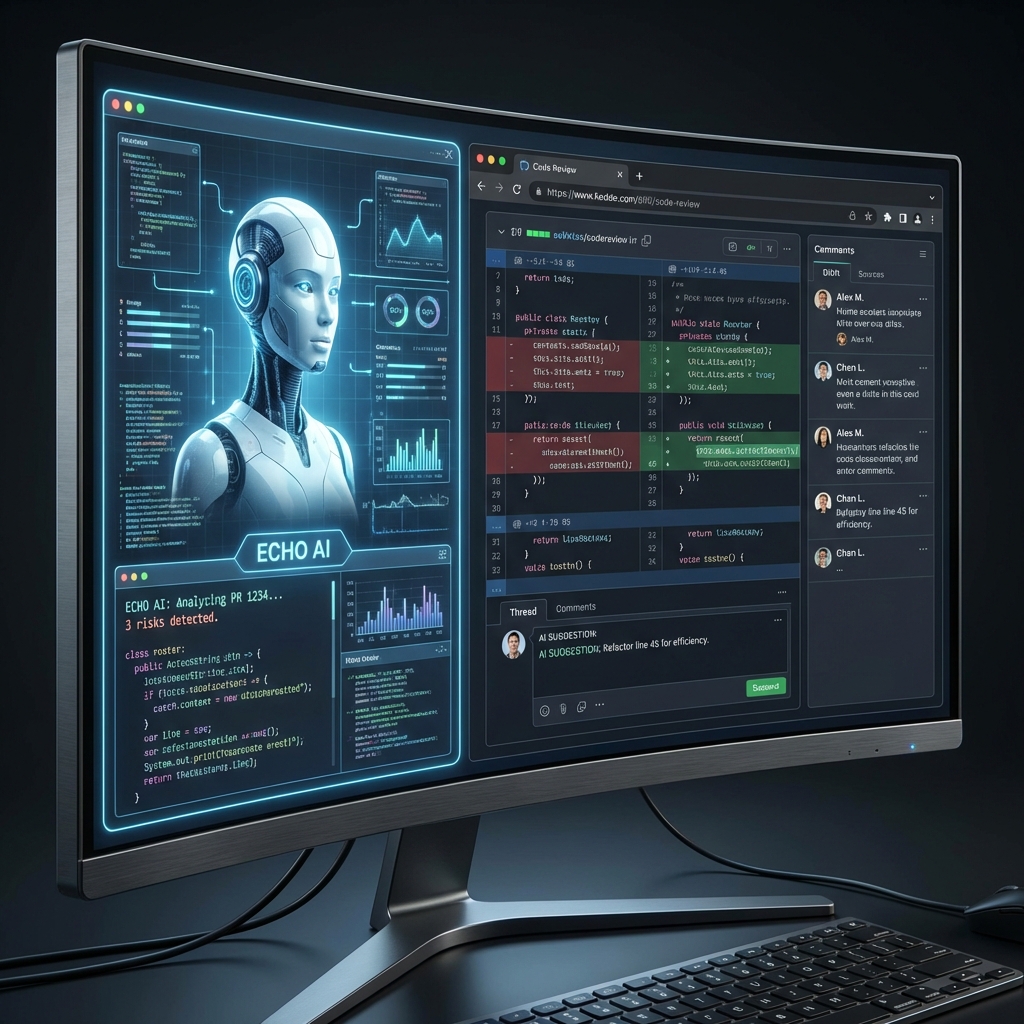
  • LLM-based code review assistant

    Does AI Review Assistance Help?

    Did you know that ~20% of LLM-generated review comments are considered valuable by developers? We studied RevMate at Mozilla and Ubisoft, finding that refactoring-related comments are 3x more likely to be accepted than functional comments.


    Check out our TSE 2026 paper!


  • Versioning through color-coded sheep

    Semantic Versioning for AI

    Did you know that 40% of AI model updates on Hugging Face are not reflected in their version numbers? We analyzed 52,000+ models to propose more formal semantic versioning practices, helping developers track critical changes in evolving AI models.


    Check out our EMSE 2025 paper!


  • Realistic automated assembly line

    Speeding up CI/CD

    Did you know that hybrid CI scheduling combining commit grouping and skip prediction can reduce commit turn-around time by 96%? Our hybrid heuristics significantly reduce redundant build activity while faster identifying failures.


    Check out our EMSE 2024 paper!


Latest Work

Doriane Olewicki, Leuson Da Silva, Oussama Ben Sghaier, Suhaib Mujahid, Arezou Amini, Benjamin Mah, Marco Castelluccio, Sarra Habchi, Foutse Khomh and Bram Adams (2026). Impact of LLM-based Review Assistant in Practice: A Mixed Open-/Closed-source Case Study, Transactions on Software Engineering (TSE), IEEE, to appear.


Hao Li, Hicham Masri, Filipe Roseiro Côgo, Abdul Ali Bangash, Bram Adams and Ahmed E. Hassan (2026). Understanding Prompt Management in GitHub Repositories: A Call for Best Practices, IEEE Software, IEEE, to appear.